AI Revolution 2025: How New Smart Tools Are Changing Work, Business, and Daily Life
AI Revolution 2025

Introduction
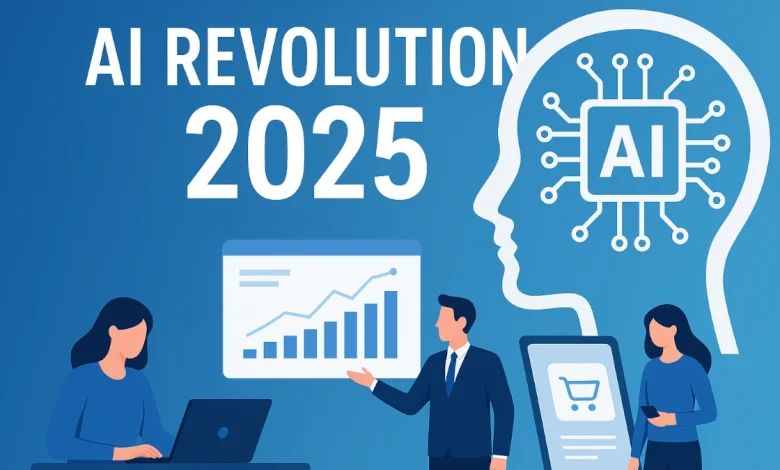
AI tools continue to grow fast in 2025. Many people use smart systems to work better, run businesses with less pressure, and complete daily tasks with more accuracy. The speed of innovation surprises many industries as companies build fresh solutions for communication, automation, and decision-making. Workers also enjoy lighter workloads because AI handles routine jobs that used to take hours. The world keeps moving toward a smart future, and the transition shapes almost every activity people do online and offline.
AI in Modern Workplaces
Many employees depend on AI to complete tasks that demand high attention. Teams use smart assistants to analyze data, manage schedules, and organize projects with fewer errors. Simple tools help individuals correct grammar, format reports, and create presentations faster. Managers make decisions with more clarity because AI provides them with clean insights from large datasets. The workplace adopts these systems willingly since productivity improves without needing long training.
Smart Automation for Small Businesses
Small business owners enjoy clearer workflows because AI takes care of activities that used to require several workers. Stores automate customer messaging, payment reminders, and product recommendations. Service providers rely on AI to respond to clients within minutes. Marketing becomes easier because AI generates fresh ideas, writes product descriptions, and analyzes customer behavior. Business growth gets stronger when owners track performance through simple dashboards.
Also Read: The Future of AI: How Artificial Intelligence Will Transform Everyday Life by 2030
AI and Customer Experience
Customers receive better support because AI can understand questions and respond with helpful information. People no longer wait for long hours to get assistance. Chatbots answer instantly, and recommendation engines provide products that match individual interests. Many companies design AI-powered return processes, refund systems, and loyalty programs. These changes make shopping smooth for people in different countries.
AI Tools for Daily Life

Households use AI to simplify routine tasks. Home assistants control lights, monitor temperature, and play music on voice commands. Parents track expenses easily with AI budgeting tools. Students learn faster with digital tutors that explain school topics in an easy way. Many families relax with AI-powered entertainment platforms that provide suggestions based on mood and habits.
AI Growth in Health and Wellness
People understand their health better because AI apps track sleep patterns, workout progress, and stress levels. Coaches use smart monitoring systems to personalize training routines. Medical professionals gain support from AI tools that help them analyze symptoms and organize patient information. Wellness companies provide tailored nutrition plans based on lifestyle data.
Also Read: Nano Banana in Gemini 2.5: Google’s Next-Level AI Image Editing Tool
AI in Education
Schools use more digital systems to teach students with different abilities. Teachers design personalized lessons that match skill levels. Learners receive real-time feedback from automated assessments. Parents stay updated through smart communication platforms that send attendance reports, homework alerts, and progress summaries.
AI as a Creative Partner
Creators across the world work with AI to produce videos, write articles, edit images, and design graphics. Artists generate new styles by merging human imagination with AI suggestions. Musicians create beats through smart audio engines that understand rhythm. Short-form video creators improve their storytelling because AI helps them plan content and monitor performance trends.
AI Privacy and Safety
Many people seek transparency from the companies that handle their data. Users want clear rules on how information is stored and shared. Governments continue to develop guidelines to protect individuals and promote responsible innovation. Companies also invest in tools that keep customer information safe from cyber threats. Responsible use becomes more important as AI enters personal spaces.
AI and the Future of Jobs
Many professionals worry about the future of employment. Companies still need people to guide AI and manage complex decisions. Instead of replacing workers, AI reduces pressure and supports tasks that demand accuracy. New roles appear in areas such as prompt engineering, AI monitoring, and digital strategy. Skills related to creativity, critical thinking, and emotional intelligence become more valuable.
Also Read: Google Pixel 10 Series: Smarter AI, Better Cameras, and a Bold Future
AI and Global Connectivity

Different regions benefit from AI growth, including developing countries. Many startups build solutions for agriculture, transport, and fintech. Farmers use smart tools to predict weather and improve harvests. Drivers depend on AI navigation for safer routes. Digital banks use AI security systems to detect fraud and support online payments.
The Role of AI in Entertainment
Movies use AI to render scenes faster. Gamers enjoy realistic environments with advanced engines. Social media platforms adopt AI to filter harmful content and protect users. Streaming apps recommend movies and music that match viewer behavior.
How People Can Prepare for the AI Era
Individuals need to focus on skills that stay relevant as systems become smarter. Digital literacy remains necessary. People who understand how AI tools operate gain stronger advantages in school, work, and business. Constant learning helps users stay ahead of new trends.
Final Thoughts
AI continues to change how people live, work, and build businesses in 2025. The tools make many activities simple, fast, and more productive. Companies gain fresh opportunities to grow because automation reduces pressure and improves customer service. Individuals save time, enjoy better entertainment, and make smarter decisions every day. The world will continue moving toward a future shaped by AI, and people who adapt early will experience the strongest benefits.
Frequently Asked Questions
AI matters in 2025 because it supports faster decision-making, improves communication, and helps businesses reduce workload. Many people rely on smart tools for education, health, and entertainment.
AI helps owners automate marketing, customer support, product suggestions, and financial tracking. The tools give businesses more time to focus on growth.
AI is safe when users follow best practices and choose trusted tools. People must review privacy settings and understand how companies handle personal data.
Workers use AI to save time on tasks that require accuracy. The tools assist with writing, planning, and analyzing information.
AI cannot replace imagination. The tools support creators by offering ideas, designs, or patterns, but humans still drive originality.