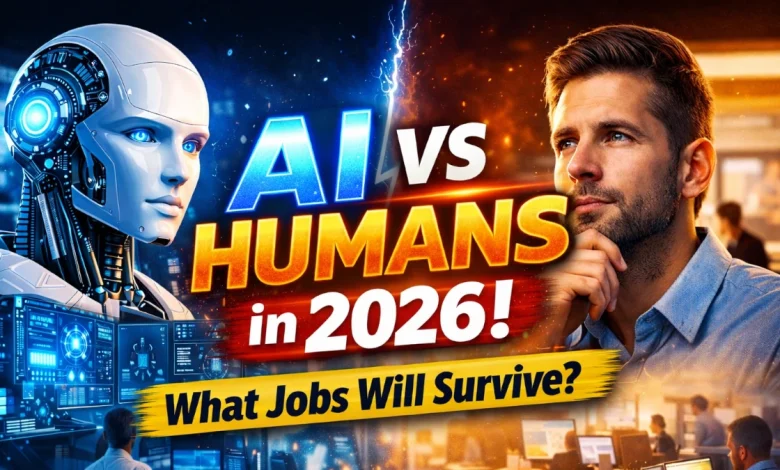
AI vs. Humans in 2026: What Jobs Will Survive the Next Tech Wave?
The future of daily technology is smart and connected

Introduction
Artificial intelligence is no longer a future idea. It is already part of daily life. In 2026, AI tools handle customer service, create content, analyze data, and even make decisions. Many people feel excited. Others feel worried. Workers across the world keep asking the same question: Will my job survive the next tech wave?
Technology has always changed the way people work. Machines replaced manual labor during the Industrial Revolution. Computers transformed offices in the digital age. Now, AI is doing something even bigger. It is learning, adapting, and improving faster than humans ever expected.
Despite these changes, not every job will disappear. Some roles will evolve. Others will grow stronger. Certain skills will remain impossible to replace. Understanding which jobs can survive helps workers prepare instead of panic.
This article explores the real battle between AI and humans in 2026. It explains which jobs remain safe, which ones change, and why human skills still matter.
The Rise of AI in the Workplace
AI systems work nonstop. They do not get tired. They do not ask for salaries or vacations. Companies love efficiency, so they invest heavily in automation. Chatbots now answer customers instantly. AI software writes reports within seconds. Smart algorithms detect fraud, predict trends, and manage logistics.
In 2026, AI adoption moves faster than ever. Businesses that ignore automation struggle to compete. As a result, many routine jobs face pressure. Tasks that follow clear rules are the easiest to automate.
However, work is more than speed and accuracy. It involves emotions, creativity, judgment, and responsibility. These human qualities create the line AI still cannot cross.
Jobs Most at Risk from AI in 2026
Some careers face serious disruption. AI handles repetitive tasks better every year. Workers in these roles must adapt quickly.
Also Read: Most People Still Don’t Understand How AI Is Changing Everything in 2026
Data Entry and Basic Administration
AI processes large amounts of information without errors. Companies now use smart systems to handle records, schedules, and documents. Manual data entry roles continue to decline.
Call Center and Basic Customer Support
Chatbots answer common questions faster than humans. Voice AI handles complaints and bookings. Only complex cases still require human support.
Simple Content Writing
AI tools now write basic articles, product descriptions, and summaries. Writers who rely on generic content struggle to compete. Quality and originality become essential.
Jobs That Will Survive and Thrive
Despite automation, many jobs remain strong in 2026. These roles rely on human strengths that AI cannot fully replace.
Healthcare Professionals
Doctors, nurses, and caregivers remain essential. AI supports diagnosis and data analysis, but it does not replace human care. Patients trust empathy, judgment, and experience.
Also Read: Best Tech Gadgets to Buy in 2025: Top 3 Must-Have Devices
Medical decisions often involve ethical choices. Humans understand emotions, fear, and pain. Healthcare requires compassion, not just data.
Teachers and Educators
Learning is not only about information. It involves guidance, motivation, and emotional support. Teachers adapt lessons to student needs. They inspire curiosity and critical thinking.
AI tools assist education, but they do not replace human connection. Educators who use technology wisely become even more valuable.
Creative Professionals
Creativity defines humanity. Artists, designers, filmmakers, and musicians bring original ideas and cultural meaning. AI can generate content, but it lacks true imagination and lived experience.
Audiences connect with stories created by real people. Creativity remains a powerful human advantage.
Skilled Trades and Technicians
Electricians, plumbers, mechanics, and construction workers solve real-world problems. These jobs require physical presence and adaptability. AI struggles with unpredictable environments.
Demand for skilled trades grows as infrastructure expands. Hands-on skills remain highly valuable.
Entrepreneurs and Business Leaders
Leadership requires vision, risk-taking, and emotional intelligence. Entrepreneurs spot opportunities and build trust. AI can analyze data, but humans make strategic decisions.
Successful leaders combine technology with human insight. They understand markets, culture, and people.
AI Specialists and Tech Professionals
Workers who understand AI gain long-term career security.
Human Skills AI Cannot Replace
Certain skills protect jobs better than any degree.
Emotional Intelligence
Humans understand feelings, motivations, and relationships. AI cannot truly empathize.
Critical Thinking
People analyze complex situations and make moral judgments. AI follows programmed logic.
Creativity
Original ideas come from human experience and imagination.
Adaptability
Humans learn across different fields and adjust quickly.
Developing these skills increases career survival.
How Workers Can Prepare for the Future
Surviving the AI era requires action, not fear.
Learn digital skills relevant to your field. Embrace lifelong learning. Improve communication and problem-solving abilities. Use AI as a tool instead of viewing it as an enemy.
Workers who adapt remain valuable. Those who resist change risk falling behind.
The Role of Governments and Education Systems
Governments must support reskilling programs. Schools should teach creativity, ethics, and critical thinking. Education systems must prepare students for jobs that do not yet exist.
Also Read: Big Tech Doesn’t Want You to Know About This 2026 Innovation
Policy plays a key role in balancing innovation and employment.
AI and Humans: A Partnership, Not a War
The future of work is not about replacement. It is about collaboration. AI handles speed and data. Humans provide meaning and judgment.
The most successful workplaces in 2026 combine both strengths. Humans guide technology. Technology amplifies human potential.
Final Thoughts
AI will continue to reshape jobs in 2026 and beyond. Some roles disappear. Others evolve. Many remain strong because human qualities matter.
Also Read: iOS 26.2 Update: Top New Features, Enhancements & Hidden Tricks You Must Know (2025)
Fear does not stop progress. Preparation does. Workers who develop creative, emotional, and technical skills stay relevant. The future belongs to those who learn, adapt, and collaborate with technology.
AI is powerful, but humanity still leads the way.
Frequently Asked Questions
No. AI replaces tasks, not all jobs. Many careers still require human judgment, creativity, and empathy.
Emotional intelligence, creativity, leadership, and critical thinking remain difficult to automate.
Yes. Understanding AI improves job security and opens new opportunities.